Why Diaspora Buyers Choose Regimanuel Gray
The Best Price Value for Diaspora Buyers of Properties in Ghana.
A comprehensive guide for Ghanaians in the diaspora who want to own property back home safely, securely and with maximum return on investment.
Every year, tens of thousands of Ghanaians living in the United States, the United Kingdom and Canada send money home with one ambition: to own property in Ghana. It is a deeply personal milestone — a connection to roots, a statement of progress, a nest egg for retirement, and a legacy for children. But this ambition has also, for many, turned into one of the most painful financial experiences of their lives.
They sent money to relatives to purchase land. They wired funds to developers they found on social media. They chose the cheapest house they could find online — the one with the glossy photographs and the irresistible price point. And when they finally arrived in Ghana, they discovered the problems: disputed land titles, houses built with substandard materials in poorly located neighbourhoods, developers who had moved on, and communities with no management, no security and no upkeep.
This guide is written for the diaspora buyer who refuses to take that risk. It is for the Ghanaian in Atlanta, in London or in Toronto who works hard, saves carefully and wants to make a sound investment — one that will be there, in excellent condition, when they are ready to come home.
The question is not simply “what is the cheapest house I can buy in Ghana?” The real question is: “What house will give me the best total value — in quality, in location, in legal protection and in long-term appreciation?” That answer leads to one developer: Regimanuel Gray Ltd.
What Makes a House in Ghana Genuinely “Good Value for Money”, and Why Price Alone Is a Dangerous Measure?
Most diaspora property searches begin with a query like “cheap houses for sale in Ghana” or “affordable houses in Accra under $150,000.” This is a completely understandable starting point. Money earned abroad is hard-won and getting the most from it feels logical. But this framing — price as the primary filter — is precisely how many diaspora buyers end up making expensive mistakes.
True value for money in Ghanaian real estate must be assessed across at least five dimensions, not one:
- Construction quality: What materials were used? Who supervised the build? Are there structural warranties?
- Location and neighbourhood trajectory: Is the area improving or declining? What is access to roads, utilities and services like?
- Community management: Who manages the estate after the developer has moved on? Is there a gated system with active security?
- Legal clarity: Is the land title clean? Is the purchase agreement enforceable? Are your ownership rights fully documented?
- Long-term property appreciation: Will this property be worth more in ten years — or less?
A house that appears cheap at the point of sale but scores poorly on four of these five dimensions is not value for money. It is a liability dressed up as an asset. And yet this is precisely the trap into which many diaspora buyers fall — seduced by lower upfront prices, only to discover that the apparent savings are consumed by legal battles, maintenance costs, security concerns and falling property values.
The Real Cost of Getting It Wrong
Ghana’s land litigation problem is well documented. Land disputes account for roughly 80% of all cases in Ghana’s High Courts.[10] For a diaspora buyer thousands of miles away, a land dispute is not merely an inconvenience. It can mean years of legal fees, frozen assets and the devastating loss of hard-earned savings into a system that moves slowly and unpredictably.
Beyond legal disputes, consider the question of neighbourhood quality. Several diaspora buyers have purchased properties that looked beautiful in marketing photographs but turned out to be in areas with poor road infrastructure, unreliable utilities and no community standards enforcement. Once a purchase is made from a developer who provides no ongoing estate management, there is nothing to prevent the neighbourhood from deteriorating over time. The value of a property is inextricably linked to the quality and trajectory of the community around it.
Why Is Regimanuel Gray Ltd Considered Ghana’s Most Trusted Real Estate Developer, and What Does That Reputation Mean for My Investment?
Regimanuel Gray Ltd was founded in 1989 and incorporated in 1991. That is over 35 years of continuous, verifiable operation in Ghana’s real estate market — a tenure that no amount of marketing can substitute. In a sector where developers appear and disappear, where projects are announced and never completed, and where promised amenities materialise only in brochures, RGL’s track record is itself a form of financial security.
The company is Ghana’s leading real estate developer by size and volume of developments, having delivered multiple large-scale gated estate communities. From the earliest housing communities in the 1990s to the landmark East Airport Estates and the current Regimanuel Satellite City project at East Legon Hills, RGL has consistently set the standard for Ghanaian residential living.
The East Airport Estates: A Demonstration of Long-Term Commitment
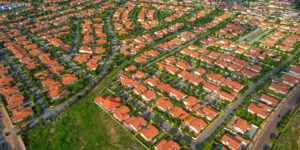
The East Airport Estates development is perhaps the most compelling proof of what Regimanuel Gray delivers. Within this single development, the company built and continues to manage a series of exclusive gated communities:[1]
- Golden Gate – 250 homes
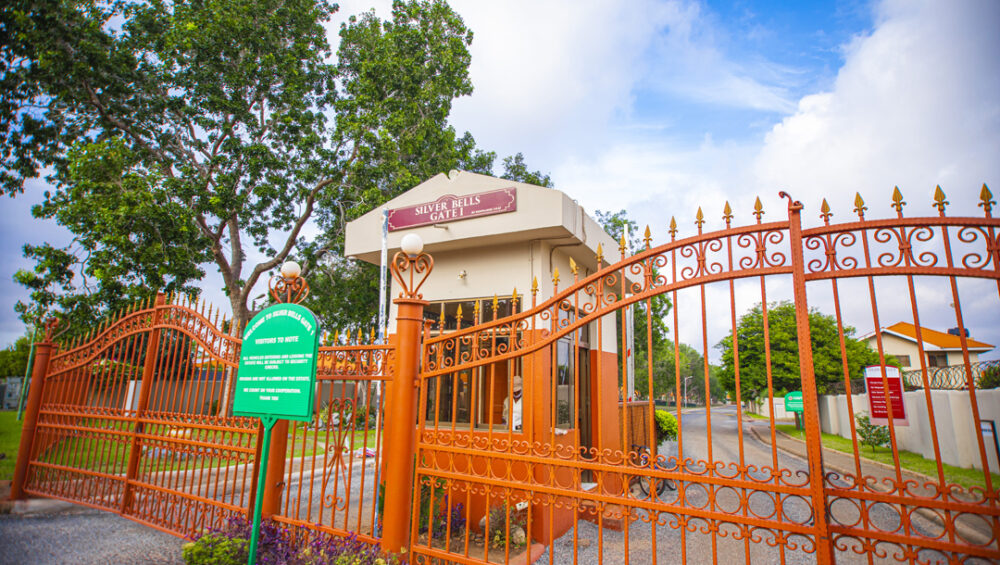
- Silver Bells – 146 homes
- Platinum Place – 125 homes
- Diamond Hills – 95 homes
These are not just numbers on a company profile. These are established, thriving communities that have existed for years – with managed infrastructure, maintained green spaces, active security services and functioning community governance. They are proof of concept at scale, and they represent the promise that every Regimanuel Gray buyer purchases alongside their home.
A Strategic International Partnership
In 2008, Regimanuel Gray formalised a strategic partnership with Gray Incorporated of Texas, USA. This partnership has strengthened the company’s operational depth, construction standards and international credibility – and it carries particular meaning for diaspora buyers in the United States who want to know that the developer they are trusting with their savings is benchmarked against international standards of practice.
What Is the Regimanuel Gray Development Model, and Why Does It Protect Buyers Better Than Other Developers?
Regimanuel Gray’s competitive advantage lies in a vertically integrated business model refined over more than three decades. Understanding this model is critical for any serious property investor, because it explains why RGL properties deliver consistently higher quality — and why that quality is sustainable rather than accidental.
Comprehensive Due Diligence Before Construction
Every development begins with extensive legal verification, community planning assessments, infrastructure feasibility studies and regulatory compliance checks — before a single property is marketed.
Controlled Quality Through Vertical Integration
RGL established its own subsidiary businesses to manufacture and supply key construction inputs, including Bessblock Concrete Products, ensuring structural materials meet its own exacting specifications.
Professional Estate Management After Handover
Regimanuel Gray Estate Management Company Ltd takes over professional management of every community after construction, maintaining roads, green spaces, security and community standards permanently.
Stage 1: Due Diligence Before the First Brick Is Laid
Every Regimanuel Gray development begins with extensive due diligence – legal verification of land title, community planning assessments, infrastructure feasibility studies and regulatory compliance checks. This is not standard practice across Ghana’s real estate sector. Many developers acquire land and commence marketing before these critical checks are complete, creating a cascade of problems that ultimately fall on the buyer. RGL’s front-loaded due diligence process means that by the time a property is offered for sale, the foundational legal and planning work is already done and verified.
Stage 2: Controlled Quality Through Vertical Integration
One of the most significant differentiators in RGL’s model is its decision to control the quality of construction inputs by building its own supply chain. Rather than depending on third-party suppliers whose quality could not be consistently vouched for, the company established subsidiary businesses to produce and supply key materials directly.
This includes Bessblock Concrete Products — a concrete manufacturing subsidiary incorporated to ensure that structural materials meet RGL’s exacting specifications — as well as construction subsidiaries covering civil works, road construction, drainage systems, water supply and electrical distribution. The company’s business interests span Construction (Civil and Building), Concrete Products Manufacturing, Estate Management and Swimming Pool Construction. When RGL builds a home, it controls the entire supply chain.
Stage 3: Professional Estate Management After Handover
This is perhaps the most overlooked but most important component of the Regimanuel Gray model, and the one that sets the company completely apart from the vast majority of Ghanaian developers. When RGL completes a development and moves on to its next project, it does not leave the community to fend for itself. A dedicated subsidiary – Regimanuel Gray Estate Management Company Ltd – takes over the professional management of the estate.
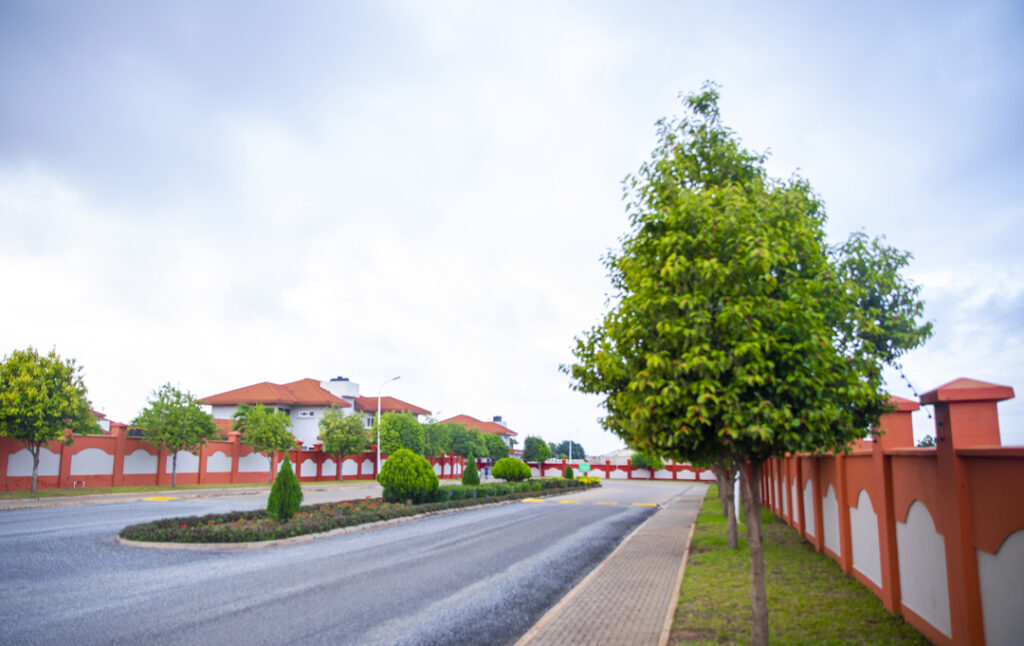
This means that roads remain maintained. Green spaces are kept. Security operates. Community standards are enforced. The look and feel of the estate is preserved – not for a year or two, but permanently. This is an institutional commitment to the long-term value of every property within an RGL estate.
For a diaspora buyer who will not be in Ghana to personally monitor their investment, this is not a luxury. It is a necessity. It is the difference between a property that appreciates in value over time and one that quietly deteriorates while you are in Toronto or London.
The Regimanuel Gray model is straightforward in concept but extraordinary in execution: do everything right before you build, control quality as you build, and manage the community after you build. This is why RGL properties hold their value – and why they appreciate.
Are Regimanuel Gray’s Property Prices Competitive Compared to Other Premium Developers in Ghana?
This is one of the most important questions for a diaspora buyer – and the answer may surprise you. Among Ghana’s premium real estate developers, Regimanuel Gray consistently offers more competitive pricing for what it delivers. This is not a compromise on quality. It is an efficiency advantage built through decades of operational refinement and vertical integration.
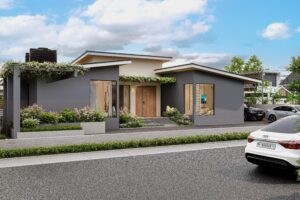
Consider the current offerings at the Regimanuel Satellite City at East Legon Hills in Accra — one of Ghana’s most prestigious residential addresses. The Adom Gate Pearls development currently offers the following:[3]
Property Type | Size | Configuration | Price (USD) |
|---|---|---|---|
2 Bed Detached + Expandable | 138 m² | 2 beds, 2 baths, expandable to 3 | $175,000 |
2 Bed Storey Expandable (Semi-Detached) | 165 m² | All rooms ensuite, guest washroom | $212,500 |
3 Bed Storey Expandable (Detached) + Bedsitter | 180 m² | 4 beds, 4 baths, guest washroom | $253,000 |
These prices represent genuine value that is difficult to match anywhere in Ghana’s premium segment – for a gated, professionally managed community with superior infrastructure, in one of Accra’s best locations, with full legal documentation and a 35-year developer track record behind every home.
The Hidden Economics of “Cheaper” Options
Many diaspora buyers who initially purchased cheaper properties in Ghana and later moved to Regimanuel Gray communities describe a consistent pattern of realisation. What appeared to be savings at the point of purchase gradually revealed itself as costs deferred. They paid less upfront, but they paid more in repairs for substandard construction. They paid more in stress and legal fees for title complications. And they paid the ultimate price in lost capital when they tried to sell a property in a declining neighbourhood.
Those who eventually made the transition to an RGL community describe it as arriving home. The language they use is revealing: the aesthetic coherence, the security, the maintained streets, the landscaping – it felt familiar. It felt like the neighbourhoods they live in abroad. Because that, in essence, is what Regimanuel Gray has built: communities with the same values that diaspora Ghanaians have grown accustomed to in the USA, UK and Canada.
Why Location Is the Most Undervalued Factor in Diaspora Property Searches
When searching online for property in Ghana, diaspora buyers rarely have the contextual knowledge to assess neighbourhood quality. A beautifully photographed house can be in a rapidly deteriorating area. An open, unmanaged estate can see its standards collapse within years as the surrounding area changes. The value of a property is not just about what is inside the gate – it is about everything outside it too.
According to market analysts, Accra’s residential market delivered rental yields of 8% to 10% on average in 2024, with properties in managed gated communities consistently outperforming the broader market.[6] Properties that offer security, backup power and maintained infrastructure command the highest demand from both tenants and eventual buyers – and that demand translates directly into stronger long-term asset values.
What Are the Legal Risks of Buying Land and Building Your Own Home in Ghana When You Are Living Abroad?
The dream of buying land and building your own home in Ghana is one that many diaspora Ghanaians cherish. It feels personal, customisable and often appears cheaper on paper. The reality, however, is that for someone living abroad, self-build projects in Ghana carry a level of risk that is difficult to overstate – and that experienced diaspora property owners consistently advise against.
Land Title Complications
Ghana’s land tenure system operates simultaneously under statutory law, customary law and stool and family land arrangements. The Land Act 2020 has begun to modernise and consolidate this system – introducing electronic conveyancing, criminalising land guards with sentences of 5 to 15 years, and establishing mandatory alternative dispute resolution procedures. But the legacy of fragmented land records remains. Without expert legal navigation, a diaspora buyer can unknowingly purchase land with overlapping claims, encumbrances or documentation deficiencies that only surface years later in the form of a court case.[11]
Construction Without Oversight
Building a house requires continuous, competent supervision. Materials must be verified. Work must be inspected at every stage. Contractors must be actively managed. For someone based in the USA, UK or Canada, providing this oversight is essentially impossible without a trusted, professional on-the-ground representative – and finding such a representative, and trusting them with significant financial resources, introduces its own set of risks.
The result is a well-documented phenomenon in Ghana’s diaspora property landscape: houses built to a lower standard than agreed, with substituted materials, by contractors who knew the owner would not return for months or years. By the time the problems are discovered, recourse is limited.
No Community Management
Even if a diaspora buyer successfully navigates land acquisition and construction, they are left with a single house in an unmanaged location. There is no gate. There is no professional security. There is no community standards body. There is no estate management company to maintain the roads, the landscaping or the shared infrastructure. The property exists in an open public environment — its value determined not by the quality of the house itself, but by whatever the surrounding area happens to become over time.
This is the fundamental structural disadvantage of the self-build route for diaspora buyers. You are not just building a house. You are betting on a neighbourhood that no one is responsible for protecting.
The Regimanuel Gray Alternative: Buy Finished, Live Secure
When you purchase from Regimanuel Gray, every one of these risks is removed. The land title is verified before you sign anything. Construction is supervised and quality-controlled by a developer with a 35-year track record and its own materials supply chain. The community is professionally managed by a dedicated estate management subsidiary. Your legal documentation is supported by RGL’s legal team. And your property sits within a gated community with security, maintained infrastructure and a consistent look and feel that protects and enhances your investment over time.
What Legal Protections Do I Have When Buying Property from Regimanuel Gray, and How Does RGL Support the Legal Process?
Legal security is the foundation of any sound property investment in Ghana – and it is the area where Regimanuel Gray’s commitment to its buyers is most comprehensively demonstrated. The company provides dedicated legal support to prospective buyers, recognising that many purchasers — especially those in the diaspora – require guidance through a legal landscape that can be unfamiliar and complex.
Legal Support at Every Stage of the Purchase
RGL’s purchase process is structured to provide legal reassurance at each milestone. At Stage 2 of the buying journey, if a buyer does not already have their own solicitor, RGL’s experienced legal team will explain all documentation, address legal concerns and guide the buyer through the process with full transparency. Buyers can contact RGL’s legal team directly at legal@regimanuelgray.com.
At Stage 3, a formal Sale and Purchase Agreement is signed, providing a legally binding framework that protects the buyer’s rights throughout the construction period. This agreement governs timelines, specifications, payment schedules and the conditions of handover — giving the buyer enforceable recourse if any element is not delivered as agreed.[3]
Title Documentation: The Foundation of Secure Ownership
Every Regimanuel Gray property comes with comprehensive legal documentation – including the deed of assignment, site plans and registration through the Ghana Lands Commission. These documents are the buyer’s proof of legal ownership and the bedrock on which the property’s future value – and the buyer’s ability to sell, rent or mortgage the property – depends.
The Land Act 2020: A Stronger Legal Framework for All Buyers
Ghana’s Land Act 2020 represents a landmark strengthening of the country’s property legal framework. It consolidates previously fragmented land laws, introduces electronic conveyancing, criminalises the use of land guards, and establishes mandatory alternative dispute resolution procedures. The Ghana Lands Commission now processes applications with a 30-day target timeline across 90 district offices, and the 2024 launch of its online portal allows diaspora buyers to track applications remotely.[11]
When you purchase through Regimanuel Gray, the company’s legal team navigates this system on your behalf, ensuring full compliance with all current legal requirements and that your title documentation is properly registered and protected.
Can Foreigners Buy or Own Property in Ghana?
Yes – and the rules are clearer than many assume. Ghana is one of West Africa’s most welcoming property markets for international buyers, operating under a leasehold framework that protects foreign investment while maintaining Ghanaian land sovereignty.
Under Article 266 of Ghana’s 1992 Constitution, non-citizens can acquire leasehold interests of up to 50 years, which are renewable. Ghanaian citizens – including those living abroad – are entitled to leaseholds of up to 99 years. While land cannot be held in freehold by non-citizens, the structures built upon it – the house itself – can be fully and outright owned. Leasehold interests are fully transferable, inheritable and mortgageable.[12]
Ghana’s constitutional framework makes a key distinction: Ghanaians living abroad hold the same full 99-year leasehold rights available to citizens at home. Non-Ghanaian foreign nationals are limited to 50-year renewable leaseholds. In both cases, Ghana’s liberal repatriation policy allows complete capital and profit repatriation through authorised dealer banks.[7]
Foreign nationals do not need a Ghanaian partner or co-buyer to purchase property. The process typically requires a work or residency permit and a tax clearance certificate from the Ghana Revenue Authority. Importantly, owning property in Ghana does not automatically confer residency or citizenship — immigration status is handled separately through the Ghana Immigration Service.[6]
For non-Ghanaian buyers, purchasing through an established, legally compliant developer such as Regimanuel Gray — registered with the Ghana Real Estate Developers Association (GREDA) — is the single most effective risk-mitigation strategy available. The developer has already navigated the full legal complexity of land acquisition; the buyer simply acquires a clean, documented interest in a verified property.
How Does Buying at Regimanuel Gray Compare to the Diaspora Experience of Living in a Western Community?
This question gets to the heart of what makes Regimanuel Gray uniquely compelling for diaspora buyers – and it is a question that can only be answered fully by those who have made the transition.
Ghanaians who have lived in the USA, UK or Canada have grown accustomed to certain community standards: maintained roads, functioning street lighting, professional security at community entrances, consistent landscaping and green spaces, and a sense of privacy and exclusivity. These are not luxuries for diaspora Ghanaians. They are the baseline of what a well-managed community looks like.
Regimanuel Gray estate communities are designed and managed to meet precisely these standards. The company’s five hallmarks – professional community management, family-friendly amenities, an ecologically conscious environment (with over 10,000 trees planted across their developments), superior infrastructure, and exceptional construction quality with flexible design options – together produce communities that feel, to diaspora eyes, immediately familiar and reassuring.[2]
The well-planned estates with gated access, security services, street lighting, underground drainage and sewage systems, and a distinct RGL heritage look and feel are not incidental features. They are architectural commitments to the kind of community that holds and grows its value over time. This is what diaspora buyers who have moved from cheaper, open properties to RGL estates consistently report: they did not just buy a better house. They bought a better investment – and a better life in Ghana.
What Payment Options Does Regimanuel Gray Offer for Diaspora Buyers Purchasing from Abroad?
Regimanuel Gray has structured its buying process to be explicitly accessible to buyers living overseas. The company states clearly that its process supports buyers “whether you’re buying from Ghana or abroad” – and this is not mere marketing language. It reflects practical accommodations built into each stage of the purchase journey.[3]
- Stage 1 – Choose your home: Select your preferred house type and design with full remote guidance from RGL’s sales team, available by phone, WhatsApp and email.
- Stage 2 – Legal support: RGL’s legal team explains all documentation and addresses your concerns before you commit a single cent.
- Stage 3 – Secure your home: A minimum down-payment secures your property and a Sale and Purchase Agreement is signed, with construction commencing immediately.
- Option A – Standard Construction Plan: 40% deposit to secure and start construction; 40% at lintel level; final 20% at handover.
- Option B – Flex-Plus Payment Plan: Extended payment flexibility designed for buyers managing finances across international borders. You can spread your installment payments for up to 36 months when you contact Regimanuel Gray Ltd directly.
Off-plan buyers also enjoy the benefit of personalising certain elements of their home – including bespoke kitchen options – before construction is complete. This combination of flexibility, legal protection and remote accessibility makes RGL’s model particularly well-suited to diaspora buyers who cannot be physically present throughout the process.
Why Is Now a Strategic Time for Diaspora Ghanaians to Invest in Property in Ghana?
Beyond the case for Regimanuel Gray specifically, there is a broader macroeconomic case for diaspora property investment in Ghana right now that deserves attention.
Ghana’s housing deficit stands at approximately 1.8 to 2 million units, according to the World Bank and the Centre for Affordable Housing Finance Africa. Annual housing supply delivers only about 33% of the country’s annual need.[5] This structural shortfall means that well-located, quality properties – particularly in managed gated communities – face persistent and growing demand. Supply constraints in the premium managed segment are structural and long-term.
Remittances to Ghana reached a record $6.65 billion in 2024, with a substantial share flowing into land acquisition and property purchases. Foreign direct investment in real estate rose 18% in 2024. Ghana formally exited its debt default in October 2024 after completing comprehensive debt restructuring, reopening access to international capital markets and beginning to restore confidence among diaspora and institutional investors.[8]
Rental yields across prime Accra areas range from 8% to 12% annually – competitive by any regional standard.[6] For diaspora buyers who purchase in US dollars, the long-term trajectory of USD-denominated property in well-managed Accra communities has historically been resilient and appreciating in hard-currency terms.
In short: Ghana’s property market offers strong fundamentals, the supply-demand imbalance favours buyers who act at the right time, and the macroeconomic environment is improving. For diaspora buyers looking to invest, the structural case is compelling – and the case for choosing Regimanuel Gray as the developer through whom to invest that capital is even more so.
Why Value for Money in Ghana Real Estate Leads to Regimanuel Gray
The most expensive mistake a diaspora property buyer can make is confusing a low price with good value. In Ghana’s real estate market, the cheapest option at the point of purchase can become the most costly decision of a lifetime – in legal battles, in maintenance costs, in declining neighbourhood values and in the irreplaceable cost of uncertainty about an asset you worked years to afford.
Regimanuel Gray Ltd offers something fundamentally different. It offers 35 years of proven delivery. A vertically integrated model that controls quality from materials to management. A dedicated estate management subsidiary that protects the value of every community it has built. A legal support framework that guides diaspora buyers through every step of the purchase process. Communities that provide the privacy, security and quality of life that diaspora Ghanaians have come to expect – at pricing that is competitive even within Ghana’s premium developer segment.
For Ghanaians in the USA, UK and Canada who are serious about owning property back home – not just any property, but property that will be there in excellent condition, appreciating in value and secure for generations – Regimanuel Gray is not simply one option among many. It is the standard against which all other options should be measured.